


- By DigitalMarketingClub
- No Comments
- Blog
Design and launch a repeatable inbound lead system in 90 days that delivers predictable, high‑quality B2B leads. This is not an aspirational play — it’s a checklist: the math you’ll use to set targets, a disciplined way to pick 4–6 tactics, a buyer‑journey content map, stepwise capture + nurture flows, tool choices for your stage, and the KPI cadence to iterate. If you want the ready‑to‑use templates, automations and live feedback, Digital Marketing Club members get a 90‑day playbook plus community lab sessions to speed execution.
Set the north star: definitions, math and 90‑day benchmarks
Predictability begins with definitions and arithmetic, not tactics. Agree on what an MQL, SQL and SAL mean for your team and the concrete signal that marks a high‑quality lead (e.g., work email + role + one intent action). Use reverse math to turn revenue targets into traffic goals.
Worked example (monthly): target revenue = $50,000. Average deal = $10,000 → need 5 closed deals. SQL→close rate = 25% → require 20 SQLs. MQL→SQL = 44% → require ~45 MQLs. Landing page conversion = 6% → need ~750 landing page visitors. If your blog→lead rate is 3% you’ll need ≈1,500 blog visits.
Use these directional benchmarks when you set targets: blog→lead ~2.7–3.1%; landing page conversion 4–9.5% (B2B SaaS at the high end); MQL→SQL ~44%; lead→customer (opportunity→close) 20–32%. Write these into your dashboard so targets are numerical, not fuzzy.
90‑day milestones (compact):
- Month 1 — define personas, set north‑star math, map content to buyer stages.
- Month 2 — publish core assets and launch capture points (landing pages, forms, webinars).
- Month 3 — activate nurture sequences, implement lead scoring, run first optimization loop.
Digital Marketing Club members can import templates to skip setup and get to testing faster.
Choose 4–6 high‑impact tactics (quality over quantity)
Focus on formats that show intent, drive engagement depth, and let you personalize follow‑ups. Top choices in 2024–26: short video, interactive tools/assessments, SEO pillar pages, LinkedIn content & conversation ads, webinars, gated guides/case studies, and segmented email nurture.
Prioritize by four criteria: audience fit, expected lead quality, cost/time to produce, and distribution speed. Score each tactic against those axes and pick the top 4–6 that cover the funnel. For many B2B SaaS teams a balanced mix looks like: SEO pillar + short product videos + a recurring webinar + LinkedIn thought leadership + email nurture.
Time-to-impact notes: SEO and pillar pages compound (3–9 months); interactive tools convert quickly but require upfront dev; short videos and LinkedIn can produce early pipeline within weeks; webinars convert high‑quality leads fast once you have an audience. Budget accordingly: seed paid distribution for launch, then shift to organic scale as assets mature. For additional inspiration on tactics and examples, review a short guide to the best B2B lead generation strategies, and content teams can follow our 12 proven lead‑gen strategies to structure execution. If you plan to prioritize SEO, see the SEO Lead‑Gen Playbook for conversion-focused tactics.
Map offers to the buyer journey and design gated funnels
Map offers to Awareness → Consideration → Decision. Leave high‑reach discovery content ungated and gate depth or conversion content. Interactive assets can both educate and qualify in a single session.
Example mapping for one persona (Marketing Ops Manager):
| Asset | Stage | CTA | Gating fields | Expected conv. |
|---|---|---|---|---|
| Short explainer video: “How to cut onboarding time by 50%” | Awareness | Watch / subscribe | None (subscribe optional) | Unlabeled; view → email subscribe 2–4% |
| Interactive ROI calculator | Consideration | Get your ROI report | Work email, role, company size | 12–20% landing → lead |
| Case study + demo request | Decision | Request demo | Work email, role, phone, budget range | 15–30% convert to SQL |
Gating rules: gate when the asset has tactical, high-value insight or when you need data to personalize outreach. Use progressive profiling on repeat visits to collect richer data without friction. Interactive tools are powerful because a single session yields both education and qualification signals. For formal frameworks on mapping content to buyer stages see this buyer‑journey content map framework, and our Content‑Led Lead Gen: 9 tactics to build MQL funnels article shows practical offer mappings you can copy.
Build capture + nurture flows that qualify and convert
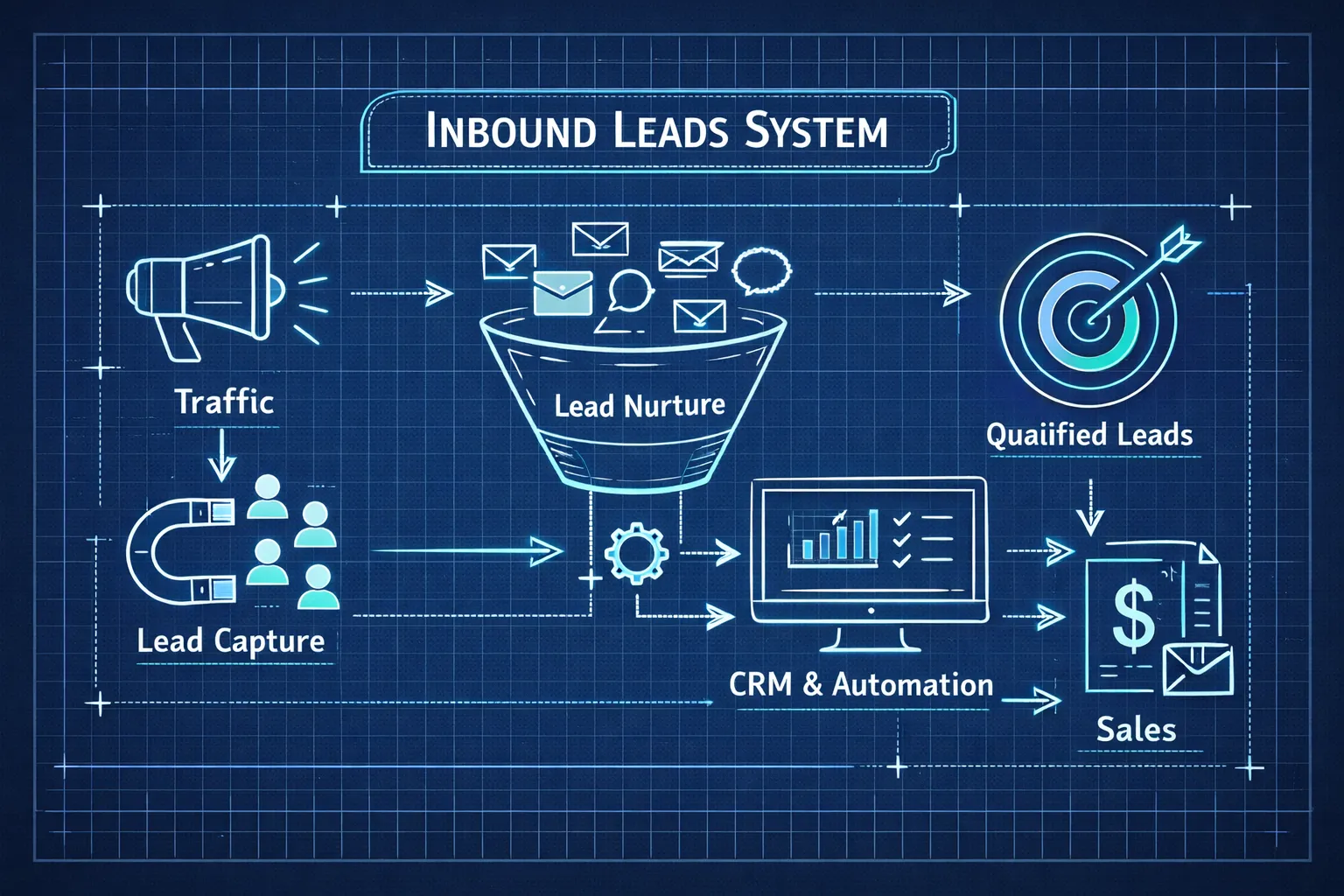
Design one canonical flow and reuse it across offers: landing page → short form → instant deliver + thank‑you page → 6‑email nurture → lead scoring → sales handoff trigger. Keep first contact low friction: name + work email + role. Deliver value immediately, then use the thank‑you page to surface next actions (webinar signup, case study, demo).
Landing page essentials: one clear headline, a single CTA, three trust signals (logo or stat, short testimonial, award), concise benefit bullets, and a short form. Social proof should be visible above the fold.
Sample nurture cadence (compact): Day 0 deliver asset; Day 3 value email + short case study; Day 7 deeper guide or webinar invite; Day 14 comparison content + explicit CTA; Day 21 demo offer; Day 30 re‑engage with digest or new insight. These emails should be tailored by persona and product interest.
Lead scoring model (example): Profile 0–30 (role, company size), Engagement 0–50 (downloads, video watch %, webinar attendance), Intent 0–20 (pricing page, demo request). MQL threshold ≈60 points. Concrete triggers to flip to sales: demo request, 80+ points, or three pricing page views in 7 days. Automate alerts (webhooks) for high‑intent events and use progressive forms to enrich profiles without blocking conversions. For practical inspiration, review these lead scoring examples to model rules that match your buyer signals. AB test form length, CTA wording and webinar timing first.
Choose the right stack: starter vs scale
Starter stack (bootstrapped): WordPress + HubSpot Free or MailerLite for capture and emails, GA4 for analytics, Calendly for meetings, Zapier for integrations, and a simple CRM. This gets you live quickly and keeps costs low.
Growth stack (mid‑market): HubSpot Professional or Salesforce with Pardot, plus Customer.io or ActiveCampaign for advanced segmentation, LinkedIn Ads for paid distribution, Wistia/Vimeo for video hosting, and an interactive tool builder. Upgrade when contact counts, automation complexity, or multi‑touch attribution needs exceed starter limits.
Tool evaluation checklist: who owns the data, integration surface (APIs/webhooks), reporting capability, and total cost at scale. Digital Marketing Club publishes hands‑on tool reviews and side‑by‑side comparisons and runs community labs to test stacks before you buy — see our Growth Hacking & Misc Marketing Tools directory and a focused Smartlead.ai Review to evaluate outreach and automation vendors.
Measure, iterate and scale: KPIs, tests and cadence
Track a single funnel report: Visits → Landing conversion → MQL → SQL → Opportunity → Close. Add CAC, LTV, pipeline influenced and lead velocity to assess efficiency. Directional benchmarks help set goals; aim to improve conversion steps by 10–30% per quarter through testing.
Testing roadmap: landing page CTA variants, video length and CTAs, interactive tool gating, and paid LinkedIn ads vs organic distribution. Run one major experiment per quarter and a set of weekly micro‑tests.
Reporting cadence: weekly channel checks (traffic, conversion), monthly funnel deep dives (drop‑offs, scoring thresholds), quarterly strategy experiments (new tactics, stack upgrades).
Two brief case callouts: Advanced Piping Products used persona mapping, SEO and HubSpot workflows to deliver 408% organic traffic growth and 255% new organic leads; Pumptec combined gated content and Sales Hub workflows to increase sales 39% in year one. Both scaled by aligning content to buyer stages and automating follow‑up. To choose analytics and attribution tools that support this level of measurement, review modern marketing analytics tools that simplify data pipelines and reporting.
Conclusion — 90‑day action checklist
Start with the math, pick a compact set of high‑impact tactics, map offers to stages, build a single capture → nurture → score flow, and instrument a simple stack. Your immediate checklist: finalize definitions and targets, choose 4–6 tactics, publish one pillar asset + one interactive tool, launch capture pages, enable a 6‑email nurture and set an MQL threshold.